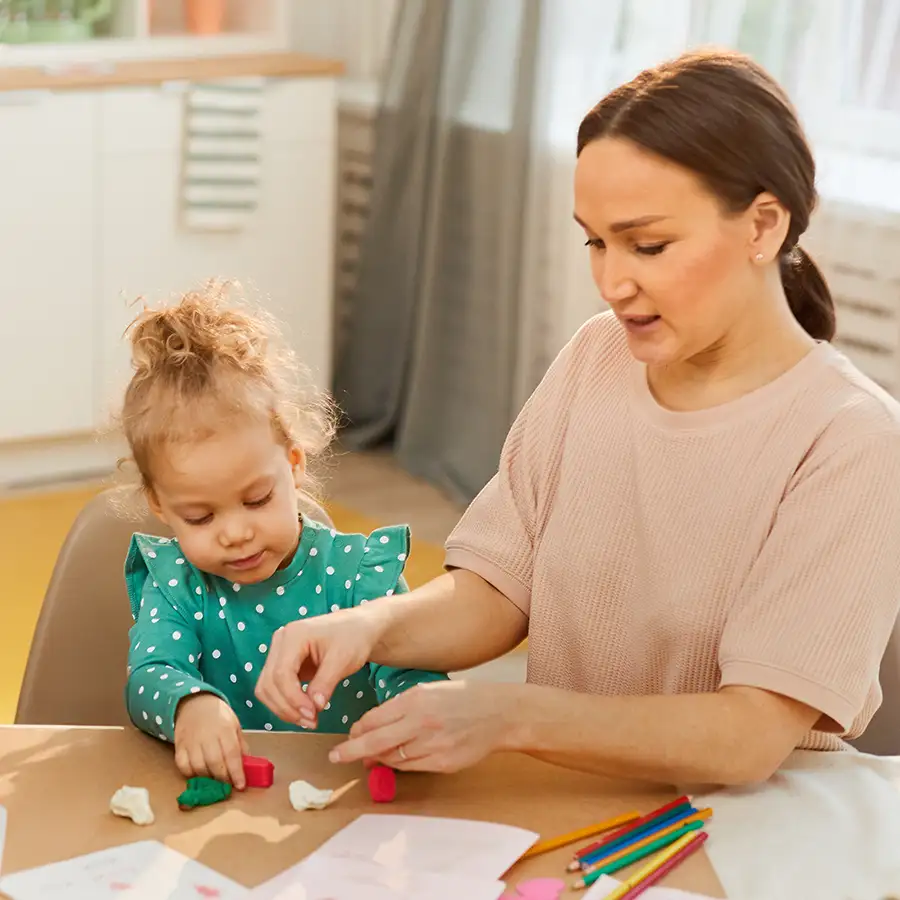
This is our preferred approach to delivering care. Research shows that children with support needs often do well with a coordinated care approach. It’s consistent and seamless, and helps children move smoothly between health professionals, facilities and other supports.
Our clinicians work as a team to build a holistic, evidence-based assessment and care plan. This plan is shaped around your child’s needs and your family’s preferences. Learn more below.
We understand that your child may already be receiving some services. If so, you’re welcome to access just one of Humanity Health Kids’ disciplines.
The lead clinician from your child’s therapy team will carry out an initial coordinated care visit with you and your family or carer. This information is then shared with the wider multidisciplinary team.
Your lead clinician will also walk you through the Schedule of Supports and Service Menu, so you can let them know your preferences for assessment, intervention and reporting.
Our highly qualified and experienced clinicians can support you with:
Psychology
Occupational Therapy
Speech Pathology
Physiotherapy
Positive Behaviour Support
Counselling
Dietetics
Exercise Physiology
Humanity Allied Health hosts events, group programs and unique therapies, supported by our team of allied health clinicians, to provide social and educational opportunities for those living with a developmental delay or disability.
These outcomes-focused events and programs have been designed for participants, support workers, carers and organisations alike.
Humanity Health Kids works with private clients, Thriving Kids and NDIS participants and their families to offer cost-effective, comprehensive assessments, tailored plans and ongoing training to achieve NDIS goals for participants from 0 to 15 years of age.
Our services for kids include occupational therapy, speech pathology, physiotherapy, positive behaviour support and psychology/counselling. This can include paediatric assessments, intervention and group activities.
Our therapists work together across disciplines. For example, if a child is working on communication and also finds it hard to sit and focus during activities, their speech pathologist and occupational therapist might work together.
The speech pathologist can focus on building language skills, while the OT looks at sensory or attention needs that might be getting in the way. Working together means each therapist understands the full picture, not just their part of it.